Jensen Huang Resigns as Nvidia CEO
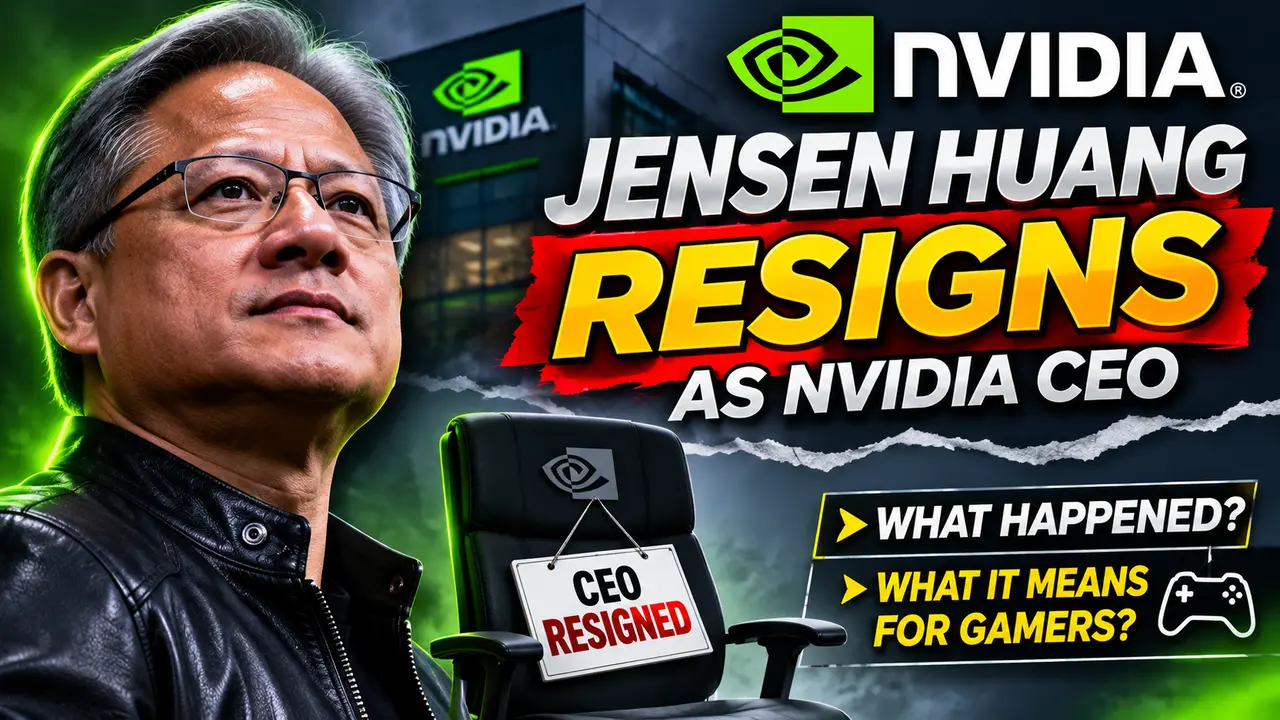
On November 12, Nvidia announced that Jensen Huang is out. He stepped down as CEO, president, and board member, effective immediately. He co-founded the company in 1993 and ran it for 33 years.
If you build PCs, play games, or just care where your next GPU comes from, this one matters. So let’s walk through what’s confirmed, what’s still only reported, and what it could mean for your rig.
This story is developing. Details may change, so check back for updates.
What Nvidia Has Officially Confirmed
Not much, and that’s worth saying plainly.
Nvidia’s announcement confirmed the resignation and named CFO Colette Kress as interim CEO. She keeps her finance role while the board searches for a permanent replacement, inside or outside the company. The board also named Harvey Jones, the former Synopsys CEO, as its first-ever board chair.
The company did not give a reason for Huang’s departure. It thanked him for his contributions and said it expects operations, customer commitments, and the product roadmap to continue without interruption. Nvidia also said it will report third-quarter results as scheduled on Tuesday, November 17.
That’s the official record. Everything below about the circumstances comes from news reports, not from Nvidia.
What the Reports Say
According to reporting from The New York Times, the Financial Times, and others, the trouble started in late October. The Times reported that US officials had concluded a woman linked to a Nvidia customer was a Chinese intelligence asset, and that Huang had a relationship with her. China has denied the allegations. Decrypt reports that Huang acknowledged in a letter to staff that he had been unfaithful, which led the board to open an independent investigation.
Then, on November 11, the Times reported a second relationship, this time with a senior Nvidia executive who reports to him. The Wall Street Journal followed with word that the board was preparing to push him out.
These are allegations and press reports. Nvidia’s board has said it has no reason to believe national security or company secrets were compromised, and the investigation’s final findings haven’t been made public. Treat the details as unconfirmed until they are.
The Stock Reaction
Markets did not take it calmly. Nvidia shares dropped sharply when trading opened on Thursday. The exact number depends on when you look: ABC News reported a drop of more than 13% in early trading, while CNBC described a fall of nearly 10%, and Decrypt had shares down about 7.7% shortly after the open. It was a volatile morning.
The bigger picture is worse. Axios noted that Nvidia has lost roughly $1.4 trillion in market value in about two weeks, since the first reports surfaced. Bernstein cut its price target in half, from $400 to $200. Citi trimmed its target to $225. Several analysts downgraded the stock before the announcement even landed.
Some of the commentary was blunt. One investment chief called the lack of a succession plan a reason the stock was “uninvestable.” Huang reportedly ran the company with around 60 people reporting directly to him and had said he didn’t believe in succession planning. That’s a strange setup for a $4 trillion company, and now it’s being tested in real time.
Who Is Colette Kress?
If the name sounds familiar, it’s because she’s been on Nvidia’s earnings calls for years. Kress joined in 2013 as CFO after stints at Microsoft, Cisco, and Texas Instruments. She’s a finance veteran, not a product visionary, and analysts say the interim role could last about a year.
The Financial Times reported that other names floated as possible candidates include Ian Buck, who runs Nvidia’s data center business, and Arm CEO Rene Haas, a former Nvidia executive. That’s speculation from sources, not an announcement.
What This Means for Gamers
Here’s the question this site actually cares about. Will your next graphics card get worse, later, or more expensive because of this?
Honest answer: nobody knows yet, and anyone claiming certainty is guessing.
What we can say:
Nothing has changed officially. Nvidia hasn’t announced any changes to GeForce products, drivers, DLSS development, or upcoming releases. The board says the roadmap continues. GPU architectures take years to design, so the next generation of cards isn’t going to be rewritten by a leadership change this week.
The real risk is execution, not technology. One portfolio manager quoted by The Globe and Mail made this point well: the roadmap is largely visible for the next few years, but Huang was the person conducting a very complicated system. Who conducts it now is the open question.
Gaming was already a smaller piece of the pie. Nvidia’s revenue is dominated by AI data center chips, and that shift happened before any of this. Some commentators are asking whether a new CEO might lean even further toward AI and treat GeForce as an afterthought. That’s a fair worry, but it’s a worry, not a plan anyone has announced. Pricing pressure on GeForce cards was already showing up too, which we covered in our piece on why you can’t buy a new graphics card this year.
Watch November 17. The earnings call puts Kress and the leadership team in front of analysts five days after the announcement. Any comment on the roadmap, the product lineup, or the CEO search will be worth reading.
Should You Change Your Buying Plans?
If you’ve been planning a GPU purchase, I wouldn’t panic-buy or panic-wait over this alone. Product roadmaps don’t swing on a week of headlines. Still, it’s a good reminder that AMD and Intel exist, and that a healthy GPU market depends on competition. If you want to see how the two sides stack up right now, our RTX 50 vs RX 9000 comparison is a good place to start.
Mostly, keep an eye on the interim period. Companies tend to play it safe while the top job is open, and big strategy shifts usually wait for a permanent CEO. That could be good news for the near-term roadmap. It could also mean a slow stretch for bold decisions.
We’ll update this article as the investigation, the CEO search, and Nvidia’s earnings call give us more to work with.